

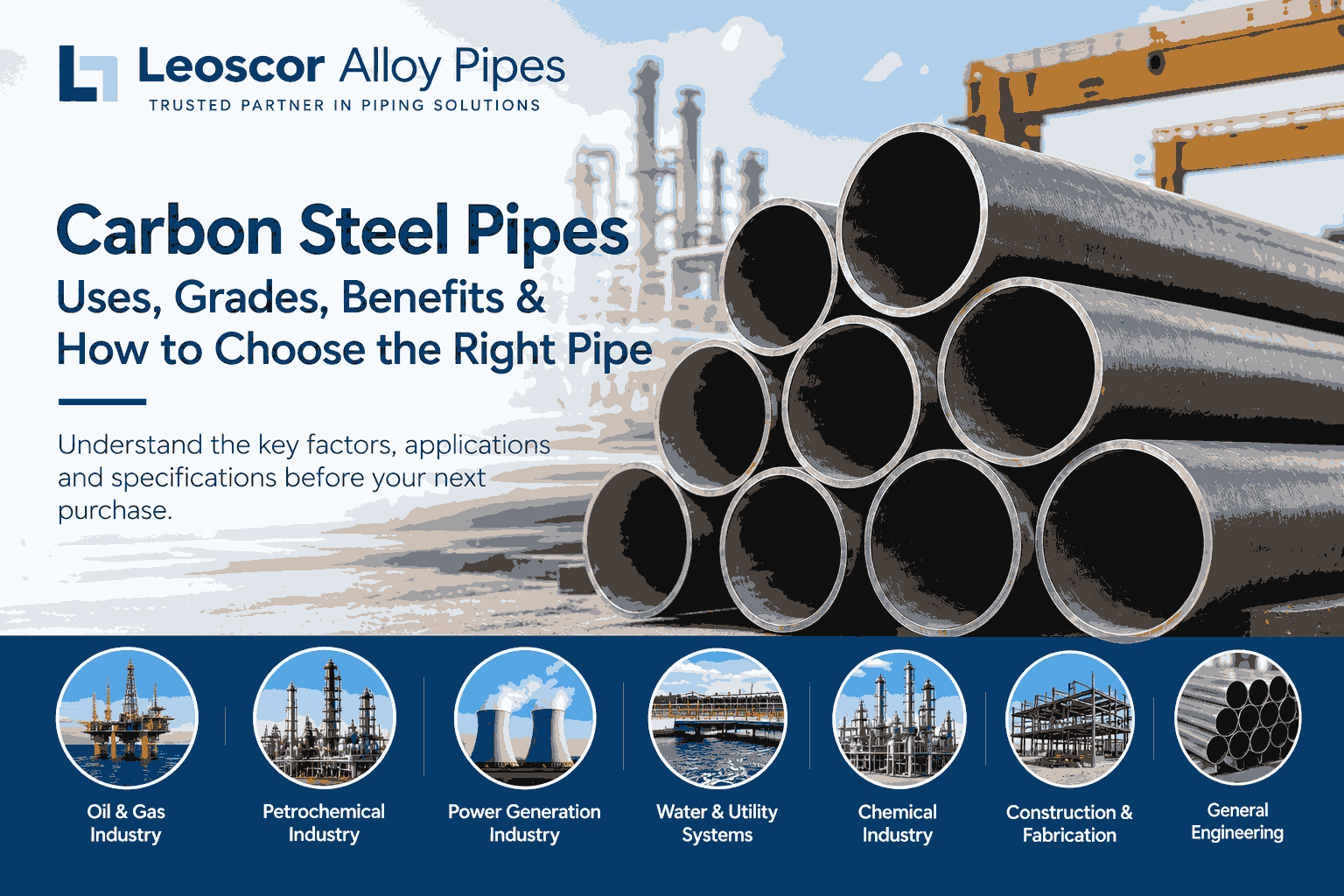
Carbon Steel Pipes: Uses, Grades, Benefits and How to Choose the Right Pipe
When a piping system has to handle pressure, heavy loads, steam, water, oil, gas, or other industrial fluids, carbon steel pipe is often one of the first materials considered. It has been used in industrial plants, construction projects, power facilities, refineries, water systems, and many other applications for decades.
The reason is fairly simple. Carbon steel offers a practical combination of strength, toughness, availability, and cost. It can also be supplied in different grades, wall thicknesses, sizes, and manufacturing forms, allowing engineers and buyers to select a pipe according to the actual working conditions of a project.
But choosing a carbon steel pipe is not simply a matter of selecting a diameter and placing an order. The grade, schedule, manufacturing method, service temperature, pressure, joining method, corrosion conditions, and applicable standard all need to be considered. This guide explains the important points in simple terms so you can make a better purchasing decision.
What Are Carbon Steel Pipes?
Carbon steel pipes are tubular products made primarily from carbon steel. Their properties make them suitable for applications where mechanical strength and dependable performance are important. Depending on the specification, they can be manufactured as seamless or welded pipes and supplied in a wide range of sizes and wall thicknesses.
One of the biggest advantages of carbon steel is its versatility. A pipe selected for a water line may have very different requirements from a pipe used in a refinery, boiler system, or oil and gas pipeline. That is why carbon steel pipes are available under different standards and grades.
Common specifications used in industrial piping include ASTM, ASME, and API standards. The correct specification depends on the service and project requirements rather than simply choosing the cheapest available pipe.
Where Are Carbon Steel Pipes Used?
Walk through an industrial plant and you will find carbon steel piping in many places. It may be carrying water, compressed air, steam, fuel, process fluids, or gases. In some projects, the pipe is also used for structural or mechanical purposes.
Oil and gas is one of the major application areas. Carbon steel pipes are used for transportation and process piping because they can provide the strength needed for demanding service. Line pipe specifications such as API 5L are commonly associated with pipeline applications.
Power generation is another important field. Carbon steel piping can be used in systems carrying water, steam, and other process fluids. Certain carbon steel tube specifications are also designed for boilers, heat exchangers, and related equipment.
Chemical and petrochemical plants use carbon steel pipes for many utility and process services. The exact grade and pipe construction must be selected according to the fluid, temperature, pressure, and corrosion environment.
Carbon steel pipes are also widely used in construction, fabrication, fire protection, water distribution, compressed-air systems, and general engineering. Their availability in many sizes and wall thicknesses makes them practical for both large industrial projects and smaller fabrication work.
How Strong Is Carbon Steel Pipe?
Strength is one of the main reasons contractors and engineers choose carbon steel. A properly selected pipe can withstand internal pressure, external loads, vibration, and demanding operating conditions.
However, it is important not to assume that every carbon steel pipe has the same strength. Grade, wall thickness, diameter, temperature, manufacturing method, and applicable design code all affect performance.
For example, a thicker-wall pipe will generally have a different pressure capability from a thinner-wall pipe of the same nominal size. Temperature can also influence allowable stress. This is why pressure ratings should be calculated or confirmed using the applicable engineering standard rather than guessed from the pipe name alone.
If your project involves high pressure or high temperature, the pipe should be selected against the actual design conditions. A reliable supplier should be able to provide the relevant material and inspection documentation for the specified product.
Understanding Pipe Schedule: Schedule 10, 40, 80 and More
Pipe schedule is one of the first terms buyers encounter when ordering industrial pipe. In simple terms, the schedule is related to the pipe wall thickness. For a given nominal pipe size, different schedules can have different wall thicknesses.
Schedule 40 is widely used in many general industrial and construction applications, but it is not automatically the correct choice for every project. Schedule 80 and heavier schedules provide greater wall thickness and may be specified where the design requires it.
The important point is that you should not select a schedule simply because it is common. The required schedule depends on pressure, temperature, mechanical loads, corrosion allowance, code requirements, and the engineer’s design.
Before ordering, confirm the nominal pipe size, outside diameter, wall thickness or schedule, length, end finish, material grade, and applicable standard.
Seamless vs Welded Carbon Steel Pipe
Another common question is whether seamless or welded carbon steel pipe is better. The answer depends on the application.
Seamless pipe is manufactured without a longitudinal weld seam. It is often selected for services where the design calls for seamless construction, particularly in certain high-pressure, high-temperature, or critical applications.
Welded pipe is manufactured by forming steel material and joining it through a welding process. It can be an economical and practical option for many piping systems, especially when larger sizes or particular fabrication requirements are involved.
Neither type should be treated as universally better. The project specification should determine the required manufacturing method. Factors such as pipe size, pressure, temperature, applicable standard, availability, and cost all matter.
What Carbon Steel Pipe Grades Are Commonly Used?
Carbon steel piping is available in several grades and specifications. The right one depends on the intended service.
ASTM A53 is commonly associated with general-purpose piping applications and is available in welded and seamless forms under the relevant specification.
ASTM A106 is widely used for seamless carbon steel pipe intended for high-temperature service. It is commonly encountered in power plants, refineries, process plants, and other industrial systems.
API 5L covers line pipe used in pipeline transportation systems. Different API 5L grades are available for different service and strength requirements.
There are also carbon steel tube specifications for boilers, heat exchangers, and other equipment. For example, Leoscor Alloy Pipes supplies carbon steel tube products such as ASTM A179, ASTM A192, and ASTM A210 grades for relevant heat-transfer and boiler applications.
The important lesson is simple: do not select a grade because it is popular. Start with the service conditions and project specification, then match the material to those requirements.
Can Carbon Steel Pipe Rust?
Yes. Carbon steel can corrode when exposed to moisture, oxygen, chemicals, salts, or other corrosive conditions. This is one of its main limitations compared with stainless steel and certain corrosion-resistant alloys.
That does not mean carbon steel is unsuitable for outdoor or industrial service. It means the pipe needs suitable protection when the environment requires it.
Depending on the application, protection may include painting, coating, lining, wrapping, cathodic protection, controlled storage, or corrosion allowance in the design. The best method depends on whether the pipe is installed indoors, outdoors, underground, or in a chemically aggressive environment.
Good storage also matters. Pipes should be kept away from standing water and handled in a way that avoids unnecessary surface damage. If a coating system is specified, surface preparation and application quality are just as important as the coating itself.
How Do You Choose the Right Carbon Steel Pipe?
Start with the service, not the pipe size.
Ask what the pipe will carry. Is it water, oil, gas, steam, compressed air, or another fluid? Next, determine the operating pressure and temperature. Then consider whether the line will be exposed to moisture, chemicals, salt, soil, or other corrosive conditions.
After that, confirm the required nominal size and wall thickness. The pipe schedule may be specified directly by the project or determined through engineering calculations.
The material standard and grade are equally important. If the project calls for ASTM A106 Grade B, API 5L, ASTM A53, or another specification, the supplied material should match that requirement and be supported by the necessary documentation.
Finally, consider manufacturing type, end connection, length, testing, inspection requirements, coating, and delivery schedule. These details may look small during purchasing, but missing one of them can create problems during fabrication or installation.
Why Is Carbon Steel Often More Affordable?
Carbon steel is often chosen when a project needs strong, dependable piping without the higher material cost associated with many alloy or stainless steel options.
Its broad availability also helps keep procurement practical. Standard sizes and commonly used grades are easier to source, while a mature manufacturing and supply network supports competitive pricing.
Still, the lowest price is not always the lowest project cost. A cheaper pipe that does not meet the required grade, thickness, testing, or documentation can lead to delays, replacement costs, and installation problems.
A better approach is to compare suppliers based on material quality, specification compliance, inspection documents, stock availability, delivery capability, and total purchase cost.
What Should You Check Before Buying Carbon Steel Pipe?
Before sending a purchase order, prepare a clear material requirement. It should include the product type, grade, standard, nominal size, schedule or wall thickness, length, quantity, end type, and any inspection or certification requirements.
If the pipe is for a critical project, ask about material test certificates and the inspection and testing requirements applicable to the order. If third-party inspection is required, mention it before the order is confirmed.
It is also useful to ask whether the supplier can provide the required size and grade from stock. For large projects, consistent availability can be just as important as the quoted unit price.
Leoscor Alloy Pipes supplies carbon steel pipes and related carbon steel products for industrial requirements. The company’s product range includes seamless, welded, ERW, fabricated, and other pipe forms, with specifications selected according to customer and project requirements.
Final Thoughts
Carbon steel pipe remains a practical choice for many industrial and construction applications because it combines strength, versatility, availability, and cost efficiency. From water and utility lines to oil and gas, power generation, chemical processing, and general engineering, it can serve a wide range of requirements when the correct specification is selected.
The key is to look beyond the words “Carbon steel pipe.” Grade, schedule, size, manufacturing method, operating conditions, corrosion protection, testing, and applicable standards all affect whether a particular pipe is suitable for the job.
If you are buying carbon steel pipe for a project, take the time to define the service conditions and specification before comparing prices. A clear requirement makes it easier for the supplier to offer the right material and helps prevent costly mistakes later.
For industrial buyers looking for carbon steel piping and related products, Leoscor Alloy Pipes can assist with product selection, specifications, availability, and export requirements. The right pipe is not simply the one that fits the line; it is the one that fits the job.