

Carbon Steel Seamless Pipes: Properties, Grades, Applications and Benefits
Carbon steel seamless pipes are widely used in industries where strength, dimensional reliability and dependable performance are essential. From oil and gas processing to power generation, refineries and chemical plants, these pipes play an important role in transporting fluids and gases under demanding operating conditions.
Unlike welded pipes, carbon steel seamless pipes are manufactured without a longitudinal weld seam. This manufacturing method makes them suitable for many industrial piping applications, depending on the material grade, wall thickness, operating pressure and temperature.
However, selecting the right pipe involves more than choosing carbon steel. Buyers must also consider material specifications, pipe dimensions, manufacturing requirements, inspection procedures and the intended application.
In this guide, we explain the properties, common grades, applications and benefits of carbon steel seamless pipes to help engineers, contractors and procurement professionals make informed purchasing decisions.
What Are Carbon Steel Seamless Pipes?
Carbon steel seamless pipes are tubular products manufactured from solid steel billets. The billet is heated and pierced to create a hollow section, which is then rolled or processed to achieve the required outside diameter and wall thickness.
Because the pipe does not have a longitudinal welded seam, it is commonly considered for applications where consistent material integrity and reliable pressure performance are important.
Carbon steel primarily consists of iron and carbon, along with other elements such as manganese, silicon, phosphorus and sulfur within specified limits. Its mechanical properties depend on the chemical composition, manufacturing process, heat treatment and applicable material specification.
These pipes are available in different grades, sizes and wall thicknesses to meet the requirements of industrial piping systems.
Key Properties of Carbon Steel Seamless Pipes
Understanding the properties of carbon steel seamless pipes helps buyers select the right material for their operating conditions.
1. Mechanical Strength
Carbon steel offers useful tensile strength and yield strength for industrial applications. The actual strength depends on the selected grade and its specified mechanical properties.
2. Pressure-Handling Capability
Seamless pipes are used in many pressure piping applications because they have no longitudinal weld seam. However, pressure capacity also depends on pipe dimensions, wall thickness, material properties, design temperature and the applicable engineering code.
3. Temperature Performance
Certain carbon steel pipe specifications are designed for elevated-temperature service. For example, ASTM A106 covers seamless carbon steel pipe intended for high-temperature service.
The grade and dimensions must be selected according to the system’s design requirements.
4. Fabrication and Weldability
Many carbon steel grades can be cut, welded and fabricated using appropriate procedures. Weldability depends on the material composition, carbon equivalent, thickness and fabrication conditions.
5. Availability in Different Grades and Sizes
Carbon steel seamless pipes are available in multiple specifications and dimensions. This allows industrial buyers to select materials according to project drawings, engineering standards and service conditions.
6. Corrosion Considerations
Carbon steel can corrode when exposed to moisture, oxygen and certain chemicals. Depending on the application, suitable coatings, corrosion allowances, protective systems and regular inspections may be necessary.
Carbon steel should not be selected for a corrosive environment without evaluating the fluid and operating conditions.
Common Carbon Steel Seamless Pipe Grades and Standards
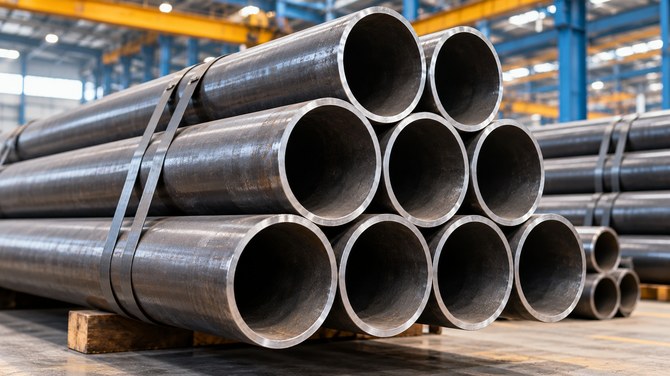
Choosing the correct grade is essential for safety, performance and compliance with project requirements. Different specifications cover different product types and applications.
| Grade or standard | Main characteristics | Typical applications |
|---|---|---|
| ASTM A106 Grade A, B and C | Seamless carbon steel pipe for high-temperature service | Refineries, process piping and power plants |
| ASTM A53 | Covers specified seamless and welded steel pipe products | General piping and utility services |
| API 5L | Covers steel line pipe for pipeline transportation systems | Oil, gas and other pipeline applications |
| ASTM A333 | Covers seamless and welded steel pipe for low-temperature service | Applications requiring specified low-temperature properties |
| ASTM A192 | Seamless carbon steel boiler tubes | High-pressure boiler applications |
These specifications are not interchangeable. For example, ASTM A106 is intended for high-temperature service, while API 5L addresses line pipe requirements. ASTM A192 covers boiler tubes rather than general-purpose piping.
Always verify the complete specification, grade, dimensions and applicable standard edition before placing an order.
Carbon Steel Seamless Pipes vs Welded Pipes
Carbon steel seamless pipes and welded pipes serve many industrial applications, but they differ in their manufacturing processes and product requirements.
| Comparison factor | Seamless pipes | Welded pipes |
|---|---|---|
| Manufacturing | Formed from a solid billet | Made from steel strip or plate joined by welding |
| Longitudinal weld seam | Not present | Present in longitudinally welded types |
| Applications | Selected pressure, temperature and mechanical service | General, structural and pressure applications, depending on specification |
| Dimensional availability | Depends on manufacturing process and supplier range | Depends on welding method and supplier range |
| Selection criteria | Grade, dimensions, design conditions and specification | Grade, weld quality, dimensions and specification |
Neither type is automatically the best choice for every project. The appropriate option depends on the design code, operating conditions, product specification, availability and overall project cost.
For a more detailed comparison, explore Leoscor Alloy Pipes’ related content on seamless pipes vs welded pipes.
Industrial Applications of Carbon Steel Seamless Pipes
Carbon steel seamless pipes are used across several industries because different grades can meet a wide range of mechanical and operating requirements.
1. Oil and Gas Industry
Oil and gas facilities use steel pipes in processing systems, utility lines and pipeline-related applications. The appropriate product depends on fluid composition, pressure, temperature and the relevant pipeline or piping specification.
API 5L line pipes are used in pipeline transportation systems, while other specifications may be required for process piping.
2. Refineries and Petrochemical Plants
Refineries require piping systems to transport hydrocarbons, steam, water and other process fluids. Carbon steel seamless pipes may be suitable where their material properties meet the specified operating conditions.
3. Power Generation
Power plants use different steel pipe grades in steam, water and auxiliary piping systems. Material selection must account for design temperature, pressure, mechanical properties and applicable engineering requirements.
4. Boilers and Heat Transfer Equipment
Boilers, superheaters and heat exchangers require products that meet the relevant tube or pipe specification. It is important to distinguish between boiler tubes and general-purpose seamless pipes when preparing a purchase order.
5. Chemical Processing
Carbon steel pipes can be used for compatible fluids and utility services in chemical processing facilities. Highly corrosive media may require a different material or a suitable corrosion-control strategy.
6. Industrial Engineering and Manufacturing
Carbon steel pipes are also used in machinery, fabrication, industrial equipment and other engineering applications where specified strength, dimensions and material properties are required.
Benefits of Carbon Steel Seamless Pipes
The main benefits of carbon steel seamless pipes include:
- No longitudinal weld seam: The seamless manufacturing process eliminates a longitudinal welded joint.
- Suitable mechanical properties: Different grades offer different strength and toughness characteristics.
- Multiple specifications: Buyers can select from standards designed for specific applications.
- Industrial versatility: These pipes serve various sectors, including oil and gas, power generation and process industries.
- Fabrication compatibility: Many grades can be fabricated using suitable procedures.
- Application-specific selection: Different sizes, wall thicknesses and grades allow engineers to match products to project requirements.
The benefits of any particular pipe depend on its specification, manufacturing quality, inspection results and intended operating conditions.
How to Choose the Right Carbon Steel Seamless Pipe
Before purchasing carbon steel seamless pipes, evaluate the following factors.
1. Identify the Application
Determine whether the pipe will be used for process piping, pipeline transportation, boiler service, heat transfer or general engineering.
2. Select the Correct Grade
Identify the material specification and grade required by the engineering design. Do not select a grade based only on its popularity or price.
3. Confirm Pipe Dimensions
Specify the nominal pipe size, outside diameter, wall thickness or schedule, length and dimensional tolerances.
4. Check Pressure and Temperature Requirements
The selected pipe must meet the design requirements for pressure, temperature, mechanical loading and the fluid being transported.
5. Verify Standards and Testing
Confirm the required ASTM, ASME, API or other applicable standards. Depending on the specification and project, testing may include chemical analysis, mechanical testing, hydrostatic testing and nondestructive examination.
6. Review Material Documentation
For industrial projects, check the required material test certificates, heat-number traceability, inspection reports and other quality documents.
7. Evaluate Supplier Capability
Choose a supplier that can meet the required grade, dimensions, documentation and delivery schedule. Confirm actual availability and compliance with the purchase specification before finalising the order.
Why Choose Leoscor Alloy Pipes?
Leoscor Alloy Pipes supplies industrial pipe products across carbon steel, alloy steel, stainless steel, duplex and other speciality material categories.
For buyers sourcing carbon steel pipes, selecting the correct product specification is an important part of ensuring that the material meets the requirements of the intended application.
Before requesting a quotation, prepare the following information:
- Required grade and material specification
- Pipe size and wall thickness
- Required length and quantity
- Applicable standard and testing requirements
- Material certification requirements
- Delivery location and expected delivery schedule
Providing these details helps the supplier evaluate the requirement and respond with a more accurate quotation.
Explore the Carbon Steel Pipes range from Leoscor Alloy Pipes for product-related information and submit your enquiry with the required specifications.
Conclusion
Carbon steel seamless pipes are an important choice for industrial piping systems that require suitable strength, reliable construction and compliance with defined engineering specifications.
Their applications range from oil and gas facilities to refineries, power plants, boilers and general industrial engineering. However, the correct product depends on the material grade, pipe dimensions, pressure and temperature requirements, fluid compatibility and applicable standards.
By evaluating these factors carefully and working with a supplier capable of meeting the specified requirements, engineers and procurement teams can make better-informed purchasing decisions.
For carbon steel pipe requirements, contact Leoscor Alloy Pipes with your grade, dimensions, quantity and project specifications to discuss suitable product options.
Frequently Asked Questions
1. What are carbon steel seamless pipes used for?
Carbon steel seamless pipes are used in industrial piping, oil and gas facilities, refineries, power generation, process plants and other applications where the selected grade meets the operating requirements.
2. Which grades are commonly used for carbon steel seamless pipes?
ASTM A106 is commonly specified for high-temperature seamless carbon steel piping. ASTM A53 covers certain seamless and welded pipe products, while API 5L covers line pipe for pipeline transportation. The appropriate specification depends on the application.
3. Are carbon steel seamless pipes suitable for high-pressure applications?
They can be suitable for high-pressure service when the selected material, dimensions, wall thickness and design conditions comply with the applicable engineering requirements. A qualified design assessment is necessary.
4. What is the difference between seamless and welded pipes?
Seamless pipes are formed from solid billets without a longitudinal weld seam. Welded pipes are manufactured by joining steel material through a welding process. The correct choice depends on the project specification and operating conditions.
5. Do carbon steel seamless pipes resist corrosion?
Carbon steel can corrode in moisture and aggressive environments. Appropriate material selection, coatings, corrosion allowances and maintenance may be required, depending on the service conditions.
6. What information is required to purchase carbon steel seamless pipes?
Buyers should provide the required grade, standard, nominal size, wall thickness or schedule, length, quantity, testing and certification requirements, and delivery details.
7. How can I request a quotation from Leoscor Alloy Pipes?
Visit the Leoscor Alloy Pipes product page and submit your requirements. Include the material grade, pipe dimensions, quantity and applicable standard to help the supplier evaluate your enquiry.